A Collaborative Initiative by Juisteen Kort & Bishara Khell
The Artistic Challenge
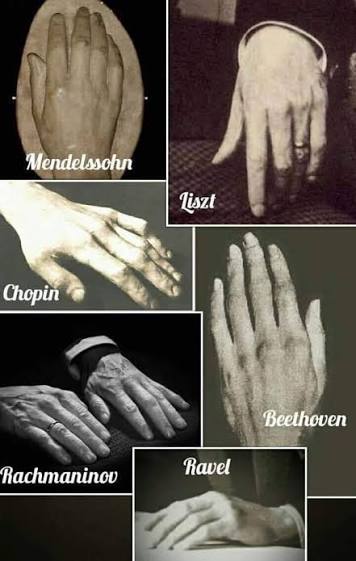
For generations, the classical piano repertoire has been overwhelmingly dominated by masterpieces written by men with exceptionally large hand spans composers who could effortlessly reach a tenth on the keys. For pianists with smaller hand structures, this poses a rigid physical barrier. Historically, this barrier has been met with a discouraging narrative: “If your hands are small, you simply cannot play this music.”
Pianist Juisteen Kort has lived this challenge her entire life. Not only does she have naturally small hands, but she also navigates a physical limitation in her right hand that prevents her pinky finger from fully extending. As a result, she can barely reach an octave. For a classical performer, confronting works of immense scope “like the Chopin Ballades” under these conditions has traditionally meant a lifetime of physical strain, pain, and artistic compromise.But Juisteen believes that a pianist’s career and artistic worth should never be dictated by the accidental geometry of their skeleton, nor by a historical instrument standard that offers only one size for all.
An Act of Artistic Activism
This project is born from the conviction that access to music is a matter of equity and human differences. Unlike string players, who can choose a fractional-sized instrument, pianists are forced to adapt to a single, unyielding keyboard scale designed centuries ago.
To tell a musician that their physical build bars them from the greatest literature in history is a profound injustice. This initiative shifts the paradigm entirely: the problem is not the pianist’s body; the problem is an inflexible system. Juisteen is actively breaking the rules to respect diverse physical abilities, proving that artistic capability lives in the mind, the soul, and the expression of the performer not the span of their fingers.
Adaptation, Not Reduction
To break this cycle, Juisteen is collaborating with acclaimed composer Bishara Khell to pioneer a specialized adaptation project. Their approach is built on a vital distinction: this is not a reduction of the music. They are not simplifying the notes, lowering the technical difficulty, or stripping away the architectural grandeur of Chopin’s writing. Instead, they treat this process as a literal adaptation to small hands.
Through meticulous ergonomic re-distribution, surgical note editing, subtle voicing adjustments, and innovative technical choreography, Juisteen and Bishara are rewriting the physical execution of the score to fit a smaller hand structure seamlessly. The level of virtuosity remains elite. The ultimate goal is for the audience to experience the full emotional depth, virtuosic power, and structural integrity of these monumental pieces without ever realizing a physical adaptation has taken place.
The Concert & A Vision for Universal Accessibility
To prove the power of this concept to the classical establishment, Juisteen and Bishara are preparing a pioneering showcase concert. This performance will serve as living proof to the world that these edited scores sound identical in depth and majesty to the originals, shattering the illusion that physical size dictates artistic capability.
But their vision extends far beyond a single stage. Juisteen and Bishara intend to establish a high-quality, open-access digital library available to pianists, students, and educators worldwide. By publishing these meticulously adapted scores to the highest professional standards, they aim to provide a vital, permanent resource for small-handed pianists globally and forever rewrite the rulebook on what smaller hands can achieve.